

A sorting room at dusk with crates, wet stone and one warm lamp

About the practice

About the practice behind the guidance

Small online practice, plain answers: who writes the nutritionist advice here, how a consultation runs, and what sits outside our scope.

Why this exists

Most people do not need a dramatic intervention

Body Care Longevity is a small online practice. It exists because most people do not need a dramatic intervention. They need someone to explain, in ordinary language, why their energy falls off at three in the afternoon and what to do about it on a Tuesday.

That is the whole brief we write against. Advice that survives a real week — a job, a household, a commute, a supermarket that is not a farmer's market — rather than an ideal week nobody actually lives. Where a suggestion only works if you have spare time and a personal chef, it does not belong on this site.

What follows is the honest version: who writes the guidance, the principles behind it, what a consultation looks like, and the limits we hold to. If any of that does not suit how you like to work, better to find out now than three paragraphs into a plan.

The person behind the words

Who writes the guidance

One nutritionist, working with adults across the United Kingdom. Every page is drafted for a specific reader rather than a generic audience, and that reader usually has a job and a household to get through.

Written for a real week

The material here is written by a nutritionist working with adults in the United Kingdom. The focus is everyday eating, sleep quality, fatigue, and the habits that support long-term wellbeing.

Each article is drafted with a specific reader in mind — usually someone holding down a job, a household, or both, who wants advice that fits a real week rather than an ideal one. That constraint shapes what gets recommended and, just as often, what gets left out.

How We Keep Guidance Useful

The subjects we stay on

Everyday eating, sleep quality, fatigue, and the daily habits that quietly carry long-term wellbeing. If a question drifts outside those, we say so instead of stretching to answer it.

Questions come back from a person

When you send a question, the reply comes from the person who writes the guidance, not a template. If the answer depends on something we cannot see from your message, we will ask rather than guess.

A simple evening meal of grains and vegetables on a slate counter

How we write

Why the site is written the way it is

A lot of nutrition writing swings between two extremes: strict rules that collapse by Thursday, or vague encouragement that changes nothing. We aim for the middle.

Named and dated

That means naming the food, the time, and the portion. "Eat more vegetables" is not advice; "add a fistful of frozen peas to whatever you already cook on a Wednesday" is something you can act on.

Thin evidence admitted

If a popular idea is not well supported, we say so, even when it would be easier to nod along. Where research is mixed, we describe it as mixed rather than picking the one study that suits a tidy conclusion.

No course to finish

There is no programme to complete and nothing to unlock. The pages are meant to be read one at a time, in whatever order matches the problem you actually have this month.

Re-read, then revise

Guidance gets revisited as our reading of the research changes. When a page no longer reflects what we would say in a consultation, it is rewritten rather than quietly left up.

The consultation

What a consultation looks like

A consultation starts with your normal week: what you eat, when you sleep, how you work, how you move. From there we look for the two or three levers most likely to change how you feel, and we write them down as specific actions.

Start with the ordinary week

Not the week you would like to have. If Tuesday is a rushed sandwich at the desk and Thursday is a proper meal, both belong in the picture — the rushed one is usually the more useful clue.

Find the two or three levers

We look for the changes with the largest likely effect for the least disruption. Sometimes that is meal timing, sometimes it is the last hour before bed, sometimes it is simply eating lunch away from a screen.

Leave with actions, not theory

You leave with suggestions you can start tomorrow, written down in specific terms, and a note of what to review in a fortnight. There is no set menu and no programme to complete — the plan is built around your week, not ours.

Review, then adjust

Fortnight two is where most of the learning happens. What held, what fell apart on a busy Wednesday, and which suggestion was quietly doing nothing. We keep the ones that earned their place.

Consultations run Monday to Friday, 9:00 AM – 6:00 PM, and Saturday 10:00 AM – 2:00 PM. If you would rather start with a single question than a full session, that is a perfectly reasonable place to begin.

Scope

The limits we work within

We are not a clinic and we do not diagnose. We cannot interpret blood tests, adjust medication, or manage a diagnosed condition on our own.

When a question sits outside nutrition and lifestyle guidance, we say so plainly and suggest you speak to your GP or another appropriate professional. Staying inside those limits is what makes the rest of the advice trustworthy — and it is the reason we will sometimes answer a question with "not from us".

Symptom-led questions that belong with a clinician get signposted, not softened into a nutrition talking point. That boundary is not modesty; it is the part of the practice you can rely on.

Evidence

How we think about evidence

Settled

Eat vegetables, sleep enough, keep moving. Decades of research point the same way, so these pages stay short and get out of your way.

Genuinely uncertain

The ideal timing of meals, the role of individual nutrients in ageing, how much protein is enough after sixty. Reasonable people read the same research differently here.

Labelled in the text

We mark the difference on the page rather than flattening it. Where research is mixed, that is the word you will read — not a tidy conclusion borrowed from the study that got the headline.

Nutrition Guidance
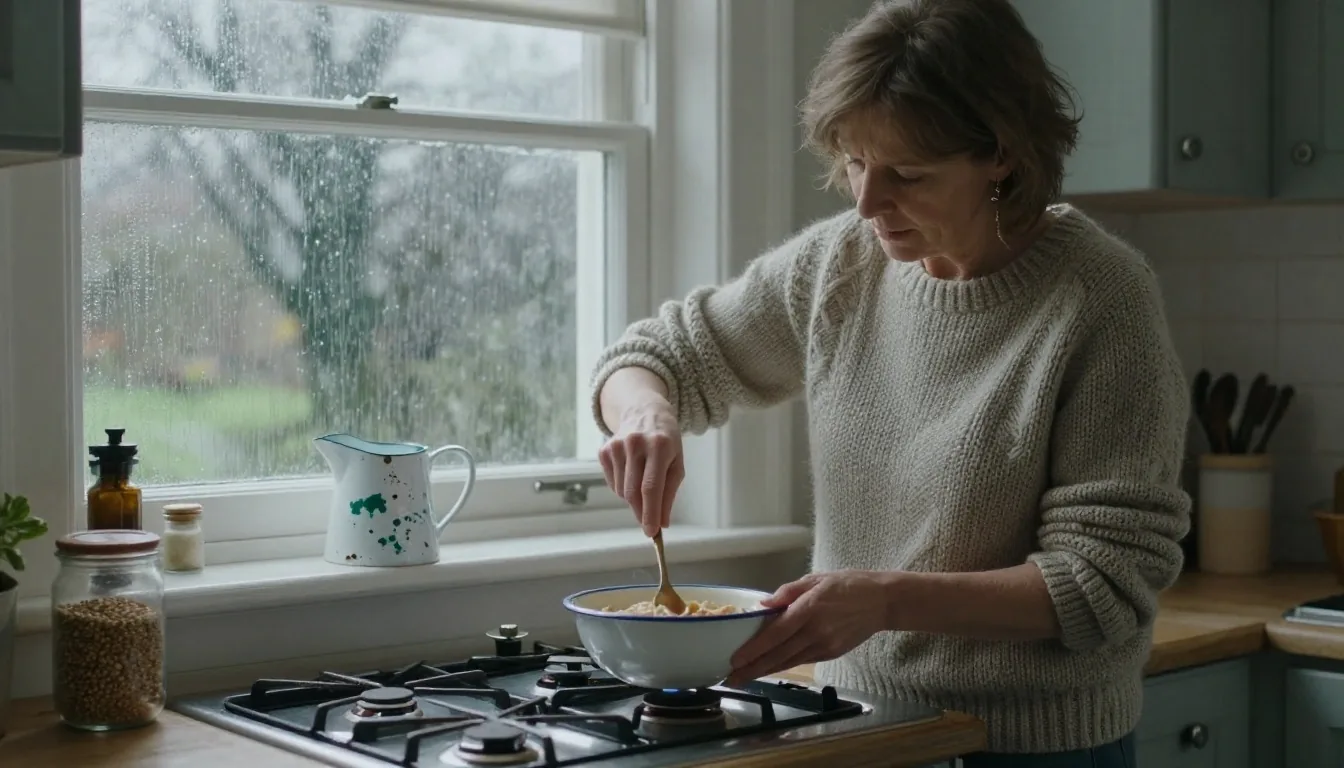
A woman making porridge in an ordinary UK kitchen on a grey morning

Across the UK

Working with people across the UK

Our readers are spread across England, Scotland, Wales and Northern Ireland, and the guidance is written to suit that spread. Supermarkets differ, working patterns differ, daylight hours differ.

Advice that assumes a Mediterranean market and a Mediterranean climate is not much use in Aberdeen in January, so we keep the practical details adaptable to where you live — the shops you actually pass, the daylight you actually get.

Our side of the deal

What you can expect from us

None of this is difficult to state, which is partly why it is worth writing down. If we ever drift from it, the page is the reference.

  • Plain answers in ordinary language, even when the underlying research is complicated.

  • Realistic pacing. Two or three changes at a time, not a page of them by Monday.

  • No upselling of supplements, powders or courses. Where a supplement is genuinely relevant, we will say why and where the evidence stops.

  • If we do not know something, we say so, rather than filling the gap with confident-sounding language.

That last point matters more than it sounds. A nutritionist who never says "I am not sure" is either reading different research to everyone else, or selling something. Neither is useful to you on a Tuesday afternoon.

Reading it well

How to make the most of the site

Read one page at a time and try one change from it. Keep a rough note of your meals and sleep for two weeks before deciding whether something worked. Ask questions when a suggestion does not fit your circumstances, because it usually can be adapted. The guidance is a starting point for your routine, not a rulebook to obey.

One change at a time

Pick the single suggestion that would survive your worst weekday, and leave the rest for later. Two changes that stick beat eight that do not.

Two weeks of rough notes

Nothing elaborate. Meals, bedtime, and how you felt at three in the afternoon. A fortnight is long enough to see a pattern and short enough to keep going.

Ask when it does not fit

Shift work, a small kitchen, a tight budget, a household where nobody eats the same meal. Tell us which one applies and the suggestion usually gets reshaped.

Questions we get

Things worth knowing before you write to us

Do you offer a set meal plan?

No. A plan printed in advance cannot know that you work late on Thursdays or that your local shop has a poor vegetable shelf. We look at your week and write suggestions into it, which is why two people with similar goals can leave with different notes.

Can you look at my blood test results?

No. Interpreting blood tests and adjusting medication sit with your GP or another appropriate professional. We can talk about the food side of a week while you do that, but the results themselves are not ours to read.

Do you sell supplements?

We do not sell them and we have no arrangement with anyone who does. Where a supplement is genuinely worth discussing — vitamin D through a British winter, for instance — we will explain what the research supports and where it stops.

How long before I notice anything?

It depends on what changed. Meal timing and caffeine habits often show up within days; sleep and long-term habits move on a slower clock, measured in weeks rather than evenings. Anyone promising a fixed timeline is guessing.

I don't live near London — does that matter?

Not for the guidance. The articles are written for readers across England, Scotland, Wales and Northern Ireland, and consultations run online. If you would rather meet in person, the practice address is in London and you can raise that when you get in touch.

Where do I start if I only have five minutes?

Pick the one page that matches your loudest complaint — tired afternoons, broken sleep, a routine that collapsed — and try a single suggestion from it for two weeks. If you send a question instead, that is also a fine first step.

Body Care Longevity

Evidence-informed nutritionist guidance on everyday eating, sleep quality, fatigue prevention and long-term body care for adults in the United Kingdom.

82 Park Street, Clifton, London, W1G 9PP

Monday to Friday 9:00 AM – 6:00 PM, Saturday 10:00 AM – 2:00 PM

[email protected]