

A quiet kitchen counter at dusk with water, oats and one warm lamp lighting the surface

Review and update process

How we keep the guidance worth reading

Nutrition writing ages quickly and misleads quietly. This page explains how articles here are written, reviewed and corrected, so you can judge for yourself how much weight to give them.

What this page is for

You should be able to check our homework

A nutritionist writing alone on the internet can say almost anything and rarely has to explain how they got there. We would rather you could see the machinery: who drafts a piece, who reads it a second time, which claims we treat as settled and which we openly flag as unresolved, and what happens when the evidence shifts underneath an article we published two years ago.

Nothing on this page is a health claim. It is a description of an editorial process for everyday nutrition and lifestyle writing aimed at adults in the United Kingdom — the same process behind every article on the site.

  • Drafted by the nutritionist who runs the practice

    Not commissioned from freelancers who never see the rest of the site.

  • Read a second time before it goes live

    A slow check with one question: does this hold up, and is it usable tomorrow?

  • No sponsors, no paid placements, no supplements sold

    If that ever changes, it gets stated here plainly and not buried in small print.

Writing and review

Written by a nutritionist, reviewed before publishing

Every article is drafted by the nutritionist who runs the practice, then read again before it goes live with a simple question: does this hold up, and does it tell the reader something they can use tomorrow? The review step is deliberately slow, because published mistakes are harder to fix than unpublished drafts.

The draft starts with a real question

Most pieces begin with something readers actually ask — how much fibre is enough, whether a late dinner matters, what to do about the three o'clock slump. The article then answers that question instead of touring the whole subject.

That constraint does a lot of quiet work. A piece that only restates common sense — eat more vegetables, sleep more — gets cut or rewritten, because it has not told you anything you could act on differently tomorrow.

  • Drafted in plain English, then tightened
  • Technical terms explained where they appear
  • Anything resting on common sense alone gets removed
The second read is slower on purpose

Before publishing, the same draft is read again as a stranger would read it: is the advice clear, is it balanced, would it still be fair to someone who is seventy rather than thirty-five? Anything that reads as overconfident gets softened, and anything that could be taken as a promise about a body outcome gets rewritten or dropped.

Four questions every draft has to survive

Can a reader act on this tomorrow?

Is the confidence level honest?

Does it hold for adults of different ages?

Is any part of it really a sales pitch?

A piece that fails any of these goes back to the desk. Nothing is published because it is due.

Where the line sits

We separate settled evidence from open questions

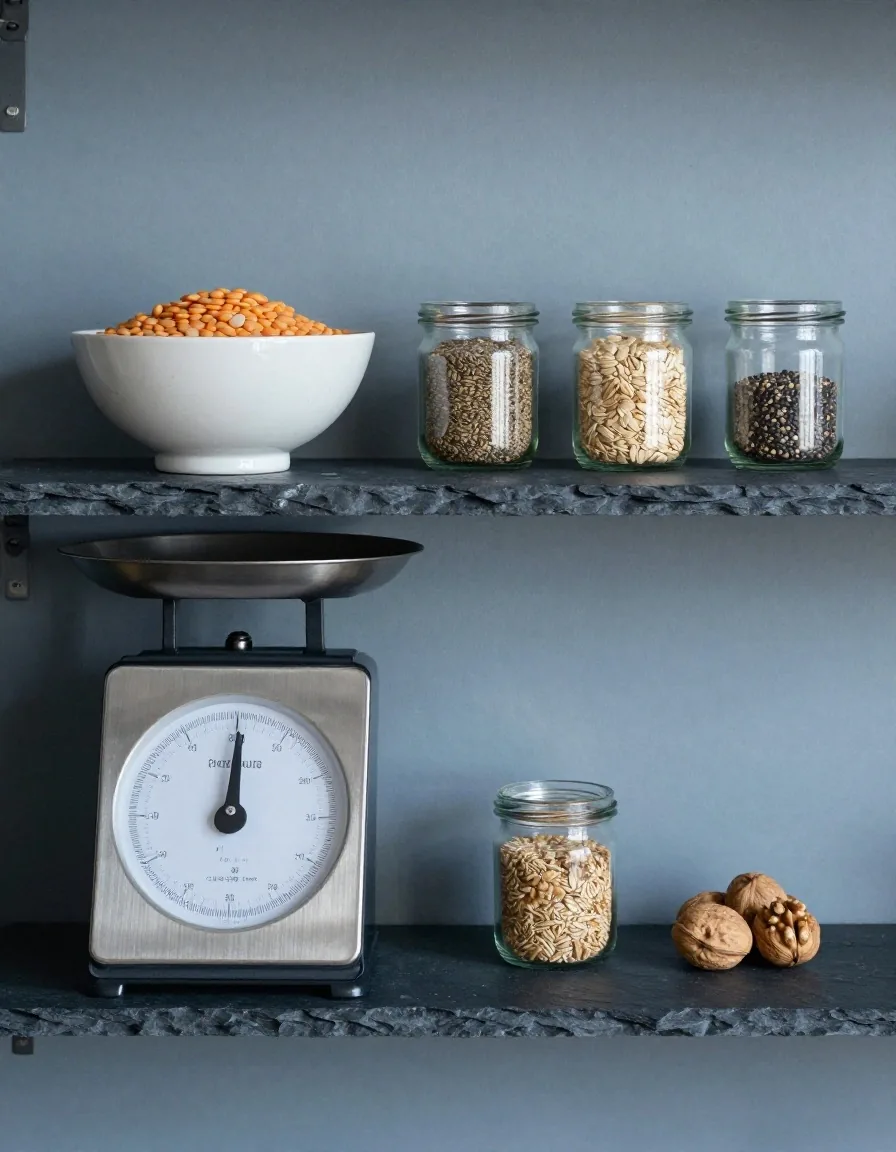
A slate table with a steel scale, ceramic bowl of lentils and small jars of oats, seeds and walnuts

When a claim rests on established public health guidance, we say so plainly and point to the source rather than dressing it up.

Some things are well established: vegetables, sleep, movement, not smoking. Others are genuinely uncertain, including meal timing, protein targets after sixty, and the role of individual nutrients in ageing. Where research is mixed, the text says so. We would rather give you an honest "this is unclear" than a confident answer that has to be revised next year.

Well established

  • Vegetables and fibre in the everyday diet
  • Sleep duration and a consistent bedtime
  • Regular movement, including walking
  • Not smoking

Still genuinely unclear

  • Meal timing and eating windows
  • Protein targets after sixty
  • Individual nutrients and ageing
  • What one person's response predicts for another

Mixed evidence is not a reason to say nothing. It is a reason to say which part is mixed, so you can hold the advice loosely where it deserves it.

Figures and sources

No numbers we cannot stand behind

When we quote a figure

  • It comes from a public health source, such as UK dietary guidance.

  • We name where it comes from, near the number itself.

  • If it changes, the article changes with it.

When we do not have one

  • We describe the pattern instead of inventing a percentage.

  • We leave the number out rather than round it into something memorable.

  • We say the research is thin, rather than dressing thin research up.

You will not find invented percentages, fake studies, or impressive-sounding statistics on this site. Where a figure appears, it can be traced; where it cannot, the sentence gets rewritten until it can.

A cool stone shelf with an empty plain glass jar, a folded cloth and loose walnuts in faint daylight

Editorial limits

What we do not publish

The list matters more than it might look. Most of what makes nutrition writing untrustworthy is not a wrong sentence — it is a category of article that should not exist in the first place.

Detox plans

No cleanses, resets or flushing programmes. If a page ever appeared to promise one, treat it as a mistake and tell us.

Promises about the body

No guaranteed outcomes for weight, energy or ageing. We will describe a habit and what it involves, not what it will do to you.

Supplements we cannot justify

We do not stock or sell supplements, so there is no shelf to push you toward. Anything mentioned stays informational.

Sponsored articles

No payment to feature a product or brand, and no affiliate arrangement hiding behind an editorial byline.

Fear-based framing

No scare paragraphs about what a single meal will do. Anxiety is easy to manufacture and it makes people eat worse, not better.

Moralising about food

No clean or dirty labels, no guilt between the lines. Food is a daily decision, not a character reference.

If this site ever changes any of the above, it will be stated plainly on this page rather than buried in small print.

Keeping it current

Updated when something changes

Articles are revisited when the guidance behind them shifts. A new position on vitamin D, or a change to UK dietary recommendations, is a reason to edit rather than leave a page quietly out of date. Corrections are treated the same way as updates: the page changes, and the reason is explained rather than hidden.

Spotted something wrong?

Send the page and the sentence. If we agree, we correct it; if we do not, we will explain why the sentence stands.

  1. 1

    Something shifts in the underlying guidance

    A national recommendation is revised, or a body of research becomes clear enough that a previously open question has moved. Those are the triggers we watch for, rather than a fixed publishing calendar.

  2. 2

    The article is re-read against the new position

    Sometimes that means a sentence changes. Sometimes it means the advice flips and the whole piece needs rewriting around the opposite recommendation, which is the more uncomfortable version of the job.

  3. 3

    Corrections from readers are checked the same way

    If you spot something that looks wrong, send it to us and we will check the source. Reader corrections have changed articles here, and we would rather hear about a problem than not.

  4. 4

    Nothing is quietly archived

    Advice we no longer stand behind gets rewritten, not taken down and forgotten. An article that disappears leaves readers holding a claim nobody has corrected.

Tone and context

Plain language, written for a UK kitchen

The writing aims to be clear on the first read. Where a technical term is necessary, it gets explained in the sentence that follows rather than left to a glossary you will not open. Shorter words where they will do, and no sentences built to sound more certain than the evidence allows.

Measurements, food labels and public health guidance follow UK conventions. That means grams and millilitres rather than cups, and traffic-light labels on packaged food rather than a system from elsewhere.

Seasonal details assume UK weather, which matters more than it sounds in a country where January has almost no usable daylight. Advice about morning walks lands differently in Aberdeen in December than it does in a sunny paragraph written for somewhere else.

A UK kitchen windowsill in soft winter light with an enamel mug, oats and pasta against rain-marked glass

UK conventions

Grams, millilitres, and the traffic-light front-of-pack labels you actually see in a supermarket aisle.

UK seasons

Dark mornings, short winter days and unreliable summers all get taken into account rather than ignored.

Why the tone stays measured

Why the balance matters

Nutrition advice is easy to make more impressive-sounding and harder to make more true. We keep the tone measured because the subject deserves it. That means no fear-based framing, no moralising about food, and no pretending that a single change will transform your life.

Useful guidance is specific, honest about its limits, and possible to follow on a wet Tuesday. If a piece cannot survive that last test — an ordinary week, an ordinary kitchen, no special shopping trip — it is not finished yet.

  • Specific: it names a food, a habit or a time of day you can actually act on.

  • Honest about limits: it says when the evidence is thin or the effect is small.

  • Followable: it works in a normal week without a special shopping list or a new personality.

Common questions

Questions we get about the process

How often are articles updated?
There is no fixed calendar. Articles are revisited when the guidance behind them shifts — a revised national recommendation, or a question that was genuinely open and no longer is. A page that still reflects current public health guidance does not need a cosmetic edit to look fresh.
Who writes and checks the guidance?
The nutritionist who runs the practice drafts each article and reads it again before publishing. It is a small operation, which is part of the point: the person answering your question on a consultation is the same person who wrote the page you read first.
Why do some articles say the evidence is unclear?
Because for several everyday questions it is. Meal timing, protein targets in later life and the role of individual nutrients in ageing are all still debated. Saying so costs us a confident headline and saves you from an answer that gets corrected in eighteen months.
Do you recommend supplements or specific products?
We do not sell supplements and we do not run sponsored articles, so there is nothing here pushing you toward a brand. Where a nutrient comes up in an article — vitamin D in winter is the usual example — it stays informational and points back to public health guidance rather than a product.
Where can I read the guidance itself?
The main articles sit under Nutrition Guidance, with separate sections for Sleep & Recovery, Fatigue Prevention and Longevity & Body Care. If you would rather talk a specific situation through, a consultation is the other route.

Where to go next

Judge the pages, then ask us anything

That is the whole process: written by a nutritionist, read twice, sourced where it can be, and honest where it cannot. You are welcome to hold the articles to it. If something reads as overconfident, or a number appears without a source, tell us and we will look at it again.

Talk to the practice

82 Park Street, Clifton, Bristol, BS1 5LA, United Kingdom

Monday to Friday 9:00 AM – 6:00 PM · Saturday 10:00 AM – 2:00 PM · Sunday closed

+44 117 929 1845 [email protected]