

A daytime kitchen counter with a glass of water, oatcakes and a board set out on cool stone
Fatigue prevention

Spotting everyday energy dips and reducing them

Feeling tired in the afternoon is common. Feeling tired every afternoon, or waking already flat, is a pattern worth looking at. This page helps you tell the difference between ordinary tiredness and something your routine is causing, then narrow down which part of the day is doing the damage.

What a normal energy dip looks like

Most people have a natural lull in the early afternoon, linked to the body clock rather than to lunch. It passes in twenty or thirty minutes with a change of scene or a glass of water. It is the difference between that lull and a slump that lasts until evening, or a tiredness that is there from the moment you wake, that matters.

Before you change anything, it helps to know which one you are dealing with. An ordinary dip has a shape: it arrives at roughly the same hour, it lifts when you stand up and move, and the rest of your day is still usable. A pattern worth investigating behaves differently. It starts earlier, lasts longer, or survives a good night and a decent lunch. If that sounds familiar, the four causes below are still the right place to start, because they cover most of what an everyday routine gets wrong.

Two things decide how heavy the afternoon feels: whether you slept enough to recover, and whether you have given your body anything to run on since morning. Coffee and a slice of toast is a start, not a plan. Neither of those observations is a diagnosis — they are simply the variables you can check without any equipment.

The lull versus the slump

  • Ordinary afternoon lull

    Arrives after lunch, clears within half an hour, and a walk or a glass of water is enough to move past it.

  • Pattern worth a look

    Runs from mid-afternoon into the evening, repeats on most days, or is already there when you wake.

  • Belongs with your GP

    Weeks of tiredness alongside breathlessness, unusual weight change, low mood or heavy periods.

Starting point

The usual suspects

Four things account for most everyday fatigue: poor sleep, irregular meals, low fluid intake, and long stretches of sitting. Each is easy to check and easy to change. If you address all four and still feel exhausted, that is useful information, and it is a reasonable point to speak to your GP.

Read the sleep guidance
  • Skipped breakfast followed by a large evening meal

    Going without food for most of the working day and then eating heavily at night loads the evening and leaves the morning with nothing behind it.

  • Coffee standing in for food and water

    Three or four cups keep the engine turning without supplying energy, and the later ones quietly eat into the sleep that would have repaired the afternoon.

  • Hours of sitting with no daylight

    Long unbroken stretches at a desk, away from a window, blur the signal that tells your body when it is day and when it is not.

  • Sleep debt built up across the week

    Two poor nights rarely show at the time. By Thursday the shortfall has collected, and a single long weekend lie-in does not always clear it.

None of this requires a calculator. Pick the one you suspect, change only that for a fortnight, and see whether the three o'clock hour feels any different. Changing all four at once makes it impossible to tell which one mattered.

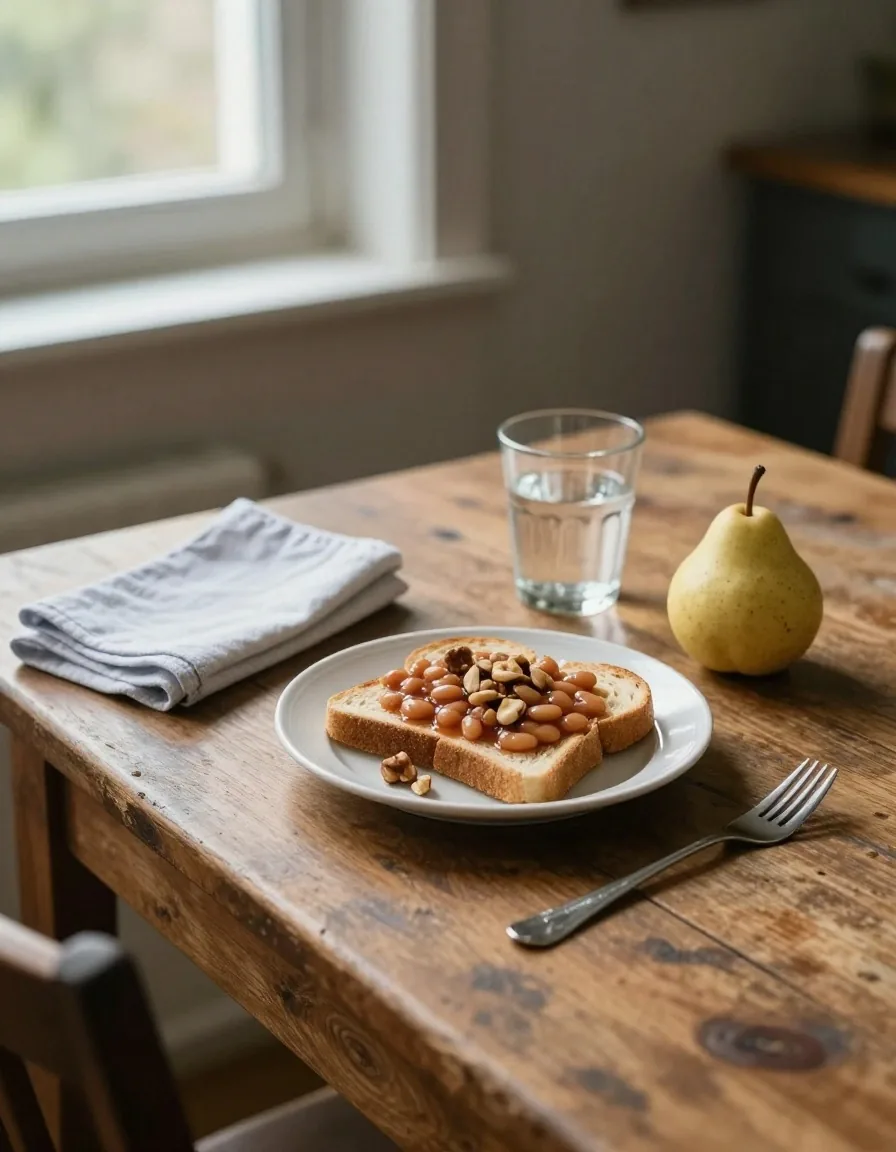
A midday plate of beans on toast with nuts, a pear and a glass of water on a stone counter

The same plate, made less one-dimensional: protein and fibre alongside the bread, a little fa in the nuts, water instead of a second coffee.

Meals

Meals that hold their energy

A meal built on refined carbohydrate alone gives you a quick lift and a quick drop. Add protein, fibre and a little fa and the curve flattens. In practice: swap the plain croissant for one with cheese, add beans to the toast, put a handful of nuts next to the fruit. You are not measuring anything, just making the meal less one-dimensional.

This is not a rule about cutting anything out. It is about what sits beside the bread. A lunch with a little staying power costs no more effort than one without, and it usually holds you until a normal dinner time rather than a 4pm raid on the biscuit tin.

Quick lift, quick drop

A plain pastry, a sweet cereal bar, or a fruit smoothie on its own.

Flatter through the afternoon

The same thing with cheese, beans, yoghurt, nuts or an egg beside it.

Movement and rest

Movement that does not exhaust you, and rest that actually restores

There is a difference between activity that adds energy and activity that drains it. A gentle walk, a short stretch, or standing up every hour usually helps. Very hard training on top of poor sleep and under-eating tends to make fatigue worse, not better. If you are already running on empty, back the intensity down for a fortnight and see what happens.

Activity that adds energy

Ten minutes outdoors after lunch, a short walk without headphones, or simply standing while you take a call. Repeated often, these do more for an afternoon dip than one heroic session.

  • Two short walks beat one long one you keep postponing.
  • Standing up once an hour is enough to change the shape of a desk day.
  • Daylight within an hour of waking helps the whole rhythm settle.
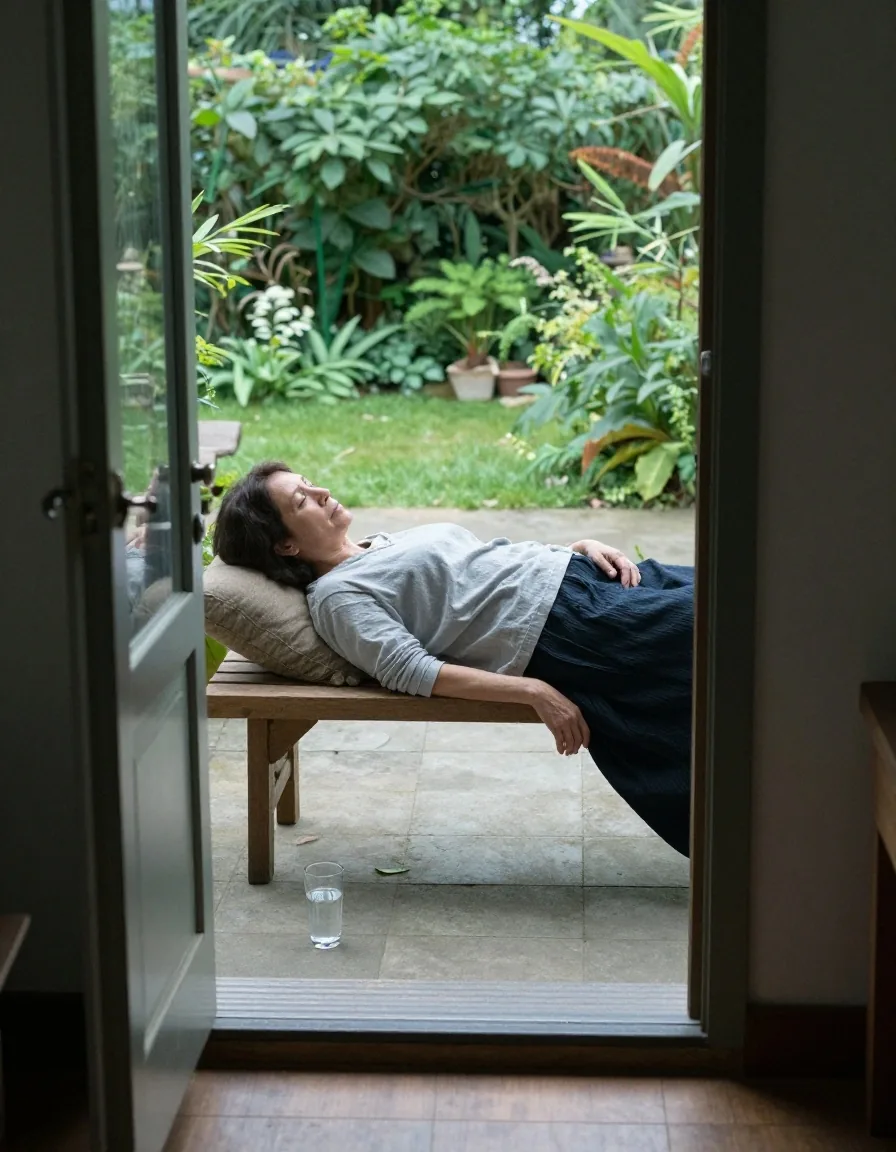
Scrolling is not rest

It feels like a break because it is easy, but it keeps your attention busy and does nothing for a tired head. Genuine rest is duller and more effective: sitting with a cup of tea, a short walk without headphones, ten minutes of quiet.

Build one of these into the late afternoon rather than pushing through to the evening on caffeine. The point is to interrupt the build-up before it becomes a slump.

When training starts to cost you

Hard sessions layered on top of short sleep and too little food tend to deepen fatigue rather than clear it. Dropping the intensity for two weeks, while keeping the habit of moving, is a sensible experiment — and the result tells you something either way.

A blank notebook, pencil and glass of water on a kitchen table in late-afternoon light
Keeping notes

Tracking without obsessing

A fortnight of rough notes is enough: what you ate, roughly when you slept, how you felt at three o'clock. Look for the pattern rather than the single bad day. Most people find one clear signal, often a missed lunch or a late coffee, and fixing it is worth more than three vague resolutions.

  1. Day 1

    Write down three things only: your first meal, the hour you went to bed, and how the mid-afternoon felt on a simple scale of your own.

  2. Week 1

    Keep the same three notes daily. Do not change anything yet — you are collecting a baseline, not fixing it.

  3. Week 2

    Change one thing you saw in the notes. Eat a real lunch, move the last coffee earlier, or go to bed half an hour sooner.

  4. Fortnight

    Compare the two weeks. One clear signal is a good result; a flat line across both weeks is worth mentioning to your GP.

A note on detail: rough is fine. If the record takes more than a minute a day, it will not last the fortnight, and two weeks of honest scribbles beats a month of abandoned colour-coding.

Boundaries

When tiredness needs a doctor

Fatigue that persists for weeks, comes with breathlessness, unusual weight change, low mood, or heavy periods, is not a lifestyle puzzle. Those symptoms belong with your GP, who can check the things we cannot. Nutrition and routine guidance is useful alongside that, not instead of it.

  • Tiredness lasting weeks, especially if it is getting heavier rather than easing.

  • Breathlessness on ordinary effort such as stairs you used to manage easily.

  • Weight changing without trying, in either direction and without a change in appetite or routine.

  • Low mood that lasts more than a couple of weeks, or heavy periods that leave you drained.

If you are already under investigation, that does not make everyday changes pointless — decent meals, sleep and water make the rest of the picture easier to read.

Common questions

Questions people ask about everyday tiredness

Is an afternoon dip something I need to fix?

Not usually. A short lull in the early afternoon is part of the body clock for most people. It is worth paying attention when the dip arrives early, lasts into the evening, or shows up most days of the week.

Does caffeine help or make things worse?

It borrows energy rather than supplying it. One or two coffees earlier in the day are unlikely to be a problem for most people; a coffee at four in the afternoon props up the evening and takes it back from your sleep.

Is a snack at three o'clock a bad idea?

It depends on what is in it and what came before it. A snack that carries some protein or fa — yoghurt, nuts, an oatcake with cheese — behaves very differently from something sweet on its own.

How much water do I actually need?

There is no single number that fits everyone — needs move with weather, activity and what you eat. A practical check is to keep a glass or bottle in view and drink with meals and between them, rather than trying to catch up late in the day.

Should I be taking a supplement for energy?

That is a question for your GP or a qualified practitioner, since it depends on what your own results show. What we can say from the routine side is that no supplement replaces regular meals, enough sleep and enough water.

How long before I notice a change?

Give any single change about a fortnight before you judge it. That is long enough for a real pattern to show and short enough that you will actually keep going. Changes to sleep and meal timing tend to show up before anything else.

Working with us

What a consultation covers, and what it does not

A consultation is a conversation about your week, not a test result. We look at when you eat, what a normal day actually contains, how your sleep is going and where the sitting happens, then agree on one or two changes you can hold. You leave with something written down rather than a list of bans.

What we do not do is diagnose. We cannot order blood tests, interpret results, or advise on medication — those conversations belong with your GP. Where a pattern in your notes points that way, we will say so directly and suggest you take it there.

  • A review of a typical day's meals, drinks and mealtimes.

  • Practical adjustments to meal timing and composition that fit your work.

  • Everyday movement and rest habits, with intensity matched to how you currently feel.

  • A short written summary you can keep and refer back to.

  • Not included: diagnosis, blood tests, prescriptions or medication advice.

A woman in her forties sitting at a kitchen table with notes and a glass of water during a consultation

Sessions are held at our Marylebone practice and by arrangement online, weekdays 9:00 AM – 6:00 PM and Saturdays 10:00 AM – 2:00 PM.

Next step

Narrow down what is costing you energy

Bring a rough fortnight of notes and we will look at them together — meals, sleep, sitting, and where the afternoon goes. If you would rather read first, start with the sleep guidance and the meal ideas above.

82 Park Street, Clifton, London, W1G 9PP · +44 117 929 1845 · [email protected]